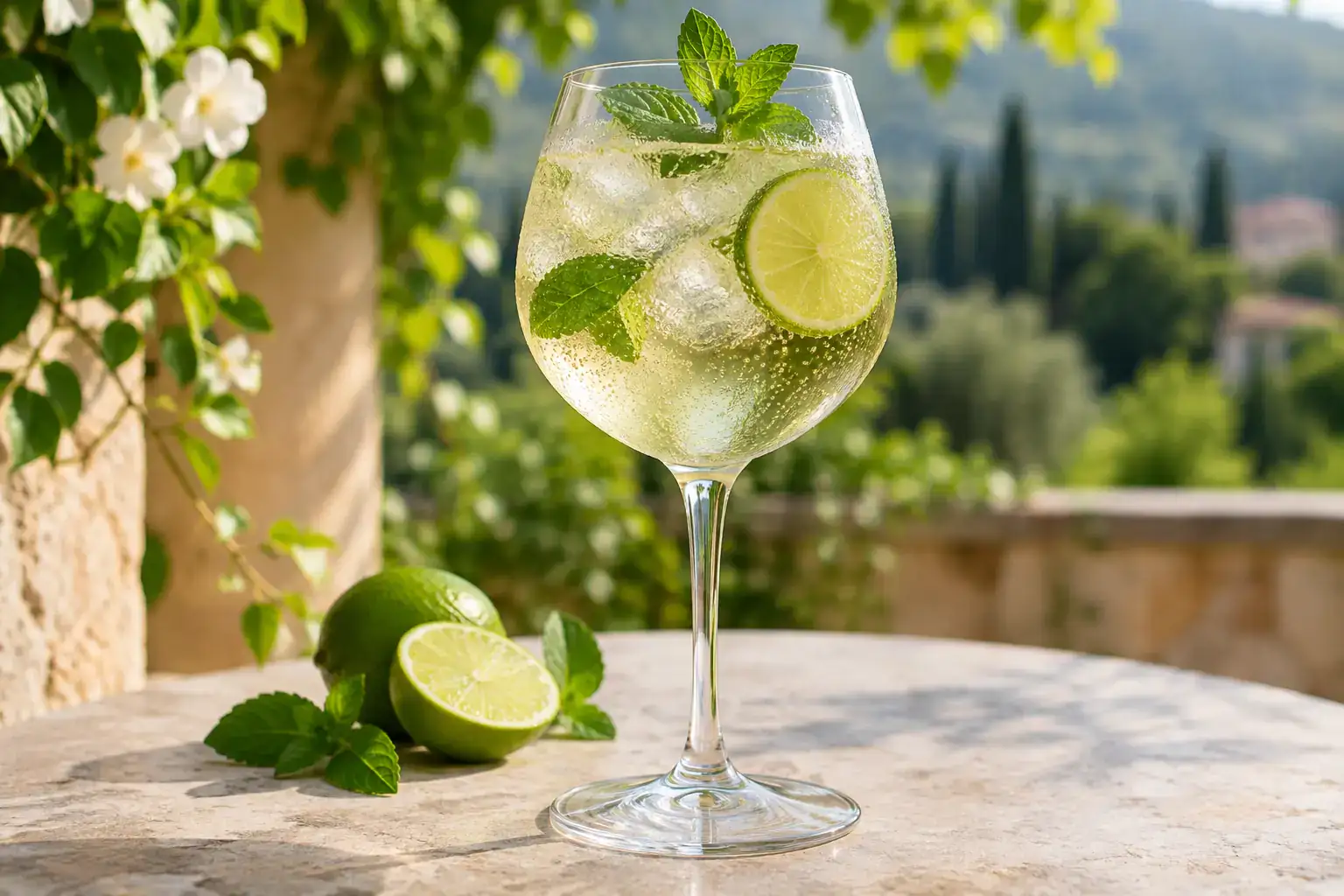

A Hugo Spritz is a sparkling, elderflower-forward cocktail with a fresh mint aroma and a clean citrus finish. It is made directly in the glass, so there is no shaker, complicated technique or long preparation involved. The key is balance: enough elderflower for its floral character, enough sparkling wine for structure, and soda water to keep the drink light.
This guide walks through the classic Hugo Spritz recipe with measured ingredients, a practical method, substitutions and troubleshooting. You will also find the difference between a Hugo Spritz and an Aperol Spritz, plus an alcohol-free variation.
Hugo Spritz Recipe: Quick Details
Preparation: 3–5 minutes
Yield: 1 drink
Glass: Large wine glass
Method: Build in the glass
Skill level: Beginner
Hugo Spritz Ingredients (1 Serving)
Measure the ingredients before you start. Chilling the sparkling wine and soda beforehand makes a noticeable difference because the drink is not shaken with ice.
- 40 ml elderflower liqueur: This provides the floral sweetness and is the defining flavour of this version.
- 60 ml Prosecco or dry sparkling wine: Use a well-chilled bottle. A dry style helps prevent the finished drink from becoming too sweet.
- 60 ml chilled soda water: Adds fizz and lightens the liqueur and wine.
- 6–8 fresh mint leaves: Add a small mint sprig for the finish.
- 1 lime wedge or thin slice: Adds a fresh citrus aroma.
- Ice cubes: Enough to fill the glass generously.
Ingredient note: Elderflower liqueur and elderflower cordial are not interchangeable in equal quantities. Liqueur contains alcohol, while cordial is generally a sweet, non-alcoholic syrup. If using cordial, start with a smaller amount and adjust to taste.
How to Make a Hugo Spritz
The drink is assembled in the serving glass. Keep the process gentle: vigorous stirring knocks out carbonation, while crushing the mint can make its flavour harsh.
- Chill your ingredients. Keep the Prosecco and soda water cold until you are ready to serve.
- Fill the glass with ice. Use plenty of ice rather than just two or three cubes. A well-chilled glass helps the drink stay refreshing.
- Wake up the mint. Place the mint leaves in your palm and clap your hands once. This releases their aroma without shredding the leaves.
- Add the elderflower liqueur. Pour 40 ml over the ice.
- Pour in the sparkling wine. Add 60 ml slowly to preserve the bubbles.
- Top with soda water. Add 60 ml, then stir once or twice with a long spoon.
- Finish with lime and mint. Add the lime slice and mint sprig. Serve immediately.
The Best Hugo Spritz Ratio
For a balanced single serve, begin with 40 ml elderflower liqueur, 60 ml sparkling wine and 60 ml soda water. This is a useful starting point rather than a rule that every palate must follow. If the drink tastes too sweet, reduce the liqueur and add a little more soda. If you want a stronger wine character, increase the sparkling wine and keep the other ingredients in proportion.
Some traditional South Tyrolean versions use elderflower syrup or cordial instead of liqueur. That changes both the sweetness and alcohol content, so adjust the measure rather than copying a liqueur-based recipe exactly.
What Does a Hugo Spritz Taste Like?
Expect a floral aroma, gentle sweetness, lively bubbles and a fresh finish from mint and lime. Elderflower is fragrant rather than sharply fruity; Prosecco brings light apple and citrus notes, while soda keeps the texture crisp. The result is usually less bitter than an Aperol- or Campari-based spritz.
Hugo Spritz Variations
Hugo Spritz with Elderflower Cordial
For a version made with cordial, begin with around 15–20 ml, then add the sparkling wine and soda. Taste before adding more because cordial sweetness varies by brand. This version is not the same as the liqueur-based cocktail.
Hugo Rosé Spritz
Replace the Prosecco with a dry rosé sparkling wine. The drink takes on a pink colour and subtle berry notes. Keep the elderflower measure modest so it does not overwhelm the wine.
Alcohol-Free Hugo-Style Spritz
Use alcohol-free sparkling wine, elderflower cordial, soda water, mint and lime. Start with a small measure of cordial, add more only if needed, and check the labels of all ingredients to confirm they are alcohol-free.
Hugo Spritz vs Aperol Spritz
The main difference is the flavour base. A Hugo Spritz gets its character from elderflower, mint and lime, giving it a floral and lightly sweet profile. An Aperol Spritz uses a bitter-orange aperitif, which creates a more pronounced bittersweet taste and orange colour. Both are sparkling aperitivo drinks, but they suit different preferences.
Common Mistakes That Affect the Taste
- Using warm sparkling wine: Warm ingredients lose their freshness quickly and encourage the ice to melt faster.
- Adding too much cordial or liqueur: The floral flavour should complement the sparkling wine, not cover it.
- Muddling mint aggressively: Bruised, shredded mint can add a bitter, grassy note.
- Using too little ice: A small amount melts quickly and can leave the drink watery.
- Stirring hard: A gentle turn is enough to combine the ingredients without losing too much fizz.
- Preparing it too early: Assemble just before serving so the carbonation and mint aroma are at their best.
Frequently Asked Questions
What is a Hugo Spritz made of?
A common modern version combines elderflower liqueur, Prosecco, soda water, fresh mint, lime and ice. Some regional versions use elderflower syrup or cordial instead of liqueur.
Can I make a Hugo Spritz without Prosecco?
Yes. Use another dry sparkling wine. The taste will vary with the wine, so choose one that is crisp and not overly sweet.
Can I use elderflower syrup instead of liqueur?
Yes, but use less at first. Syrup is usually sweeter and does not provide the same alcohol content or flavour as elderflower liqueur. Adjust the amount to taste.
Is a Hugo Spritz bitter?
It is generally floral and lightly sweet, not strongly bitter. The mint and lime provide freshness rather than the pronounced bitterness associated with some red aperitif cocktails.
Can I prepare a Hugo Spritz ahead of time?
Measure the ingredients and prepare the garnish in advance, but pour and combine the sparkling ingredients just before serving. This keeps the drink lively.
What glass should I use?
A large wine glass is ideal because it has room for ice, mint and lime. A tall glass can also work if it comfortably holds the ingredients.
More Cocktail Recipes from Madeera
If you enjoy making classic drinks at home, explore our White Russian recipe, Cuba Libre guide and pineapple martini recipe for more cocktail ideas.
Final Thoughts
A good Hugo Spritz is about freshness and restraint. Chill the ingredients, measure the elderflower carefully, use plenty of ice and handle the mint gently. Start with the 40:60:60 ml ratio, then adjust the sweetness to suit your taste. Make each glass just before serving for the best bubbles and aroma.
Responsible drinking: This recipe contains alcohol and is intended only for adults of legal drinking age. Follow local laws, never drink and drive, and choose the alcohol-free variation if you do not consume alcohol.


