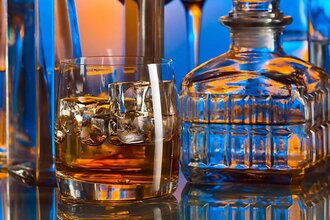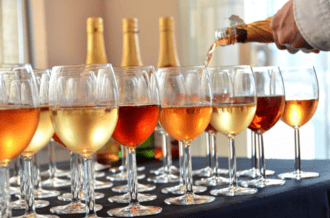


Whisky comes off the still as a clear, fiery liquid that looks more like vodka than the golden dram in your glass. So where do the amber colour, the vanilla sweetness and the warm spice come from? The answer is not the grain, the water or the still — it is the oak barrel. By most estimates, 60–80% of a whisky's final flavour comes from the cask it slept in. This is the science of why whisky is aged in oak barrels, what the wood actually does, and why the same spirit can taste completely different after a few years in different casks.
New-Make Spirit Is Colourless — the Barrel Gives It Everything
Freshly distilled whisky, called new-make spirit, is completely clear. It leaves the still at around 60–70% ABV and, before it goes into a cask, it is usually cut with water to about 63.5% ABV. At this stage it tastes raw, grainy and harsh — all cereal heat and sharp edges, with none of the vanilla, caramel or dried-fruit notes we associate with whisky.
Every drop of colour in a finished whisky comes from the barrel (unless a small amount of caramel colouring is added, which some large brands do). The golden, amber and deep-mahogany shades are all extracted from oak over years of slow contact. The same is true of most of the flavour: the wood donates it, filters it and reshapes it.
Why Oak — and Only Oak?
Whisky makers use oak for a combination of physical and chemical reasons that no other common wood offers:
- Strength and structure. Oak's wide radial rays make it strong enough to be shaped into a watertight cask that survives decades of use.
- No resin. Unlike pine or rubberwood, oak has no resin canals that would leak harsh, turpentine-like flavours into the spirit.
- The right chemistry. Oak contains lignin, hemicellulose, tannins and lactones — compounds that, once heated and soaked in alcohol, break down into vanilla, caramel, coconut and spice notes.
- It breathes. Oak is porous enough to let tiny amounts of oxygen in and a little spirit out, but tight enough to hold liquid for decades.
That is also why the law insists on oak. Scotch whisky must, by law, mature in oak casks in Scotland for at least three years before it can legally be called Scotch. Bourbon must be aged in new, charred oak containers. The barrel is not packaging — it is part of the recipe.
What Actually Happens Inside the Barrel
Maturation is not passive storage. Five processes run at once, all driven by the wood, the air and time:
1. Extraction — the barrel adds flavour
Alcohol and water slowly pull compounds out of the oak. Lignin breaks down into vanillin (vanilla), hemicellulose sugars caramelise into toffee and butterscotch notes, and oak lactones add coconut and woody spice. Tannins contribute structure and a gentle drying grip. This is where the colour comes from, too.
2. Filtration — the char removes harshness
Most bourbon barrels are set alight inside for 15 seconds to a few minutes. The resulting char layer works like activated charcoal, trapping or transforming harsh sulphur compounds and rough, immature notes from the new-make spirit. Charring also cracks open the lignin, making vanilla precursors easier for the spirit to reach, and browns the wood sugars into caramelised flavour.
3. Oxidation — a slow breath of air
Tiny amounts of oxygen seep through the staves over years. This slow oxidation softens harsh edges, helps build fruity esters from acids and alcohols, and lets flavours knit together into something rounder and more complex.
4. Concentration — the angel's share
Some spirit evaporates through the wood every year. Distillers call this the "angel's share". In Scotland's cool, humid climate the loss is roughly 2% a year — so a 12-year-old Scotch has lost about a quarter of its original volume. In Kentucky's hot rickhouses the loss can reach 4–8% a year, and in warm tropical climates like India's it can exceed 8–10%. Evaporation concentrates everything left behind, which is one reason old whisky is expensive: a good part of it quite literally flew away.
5. Time chemistry — flavours keep rearranging
Acids and alcohols slowly form esters, tannins turn into acetals, and harsh phenolics mellow. The spirit is not just sitting in the barrel; it is reacting with it, year after year.
American Oak vs European Oak: Two Very Different Personalities
Not all oak is the same. The species — and what the cask held before — decide much of the final character.
| Oak / Cask Type | Main Flavours | Where You Meet It |
|---|---|---|
| American white oak (Quercus alba), new charred | Vanilla, coconut, caramel, sweet spice | Bourbon; first-fill Scotch and Indian single malts |
| American oak, ex-bourbon (refill) | Vanilla, honey, soft creaminess, gentle oak | The backbone of most Scotch whisky today |
| European oak (Quercus robur / petraea), ex-sherry | Dried fruit, spice, dark chocolate, rich tannin | Sherry-cask Scotch, PX and Oloroso finishes |
| European oak, ex-wine | Red fruit, spice, softer tannin | Wine-cask finished whiskies |
A first-fill cask — one being used for whisky for the first time after holding bourbon or sherry — gives up its flavours far more strongly than a refill cask that has already matured several batches. That is why distillers talk about "first-fill ex-bourbon" or "first-fill PX sherry" on the label: it tells you how loud the barrel's voice will be.
Size, Climate and Time: Why the Same Whisky Ages Differently
- Cask size matters. A smaller cask has more wood surface touching each litre of spirit, so the whisky picks up oak character faster. A large 500-litre sherry butt matures spirit far more slowly — and, many argue, more gracefully — than a 200-litre barrel.
- Climate matters more. Warm warehouses speed up every reaction. Spirit expands into the wood in summer heat and contracts back out in winter, pumping flavour in and out of the staves. That is why Indian single malts and bourbons can develop deep colour and richness in just a few years, while a Scotch needs a decade or more for the same depth. It is also why the angel's share is so much higher in India.
- Age is not a score. Older is not automatically better. Past a point — often around 12–18 years for Scotch, 6–8 for bourbon — tannin and woody bitterness can start to overtake the sweetness. The "best" age is where extraction, oxidation and concentration are in balance, and that point is different for every cask.
Does Whisky Keep Ageing in the Bottle?
No. Whisky stops ageing the moment it leaves the cask and is bottled. A 12-year-old whisky bought in 2010 is still a 12-year-old whisky in 2026, no matter how long it sat on your shelf. The age statement on the label is the age of the youngest whisky in the bottle, not the average — and the clock only runs inside oak.
Why This Matters When You Buy a Bottle
Next time you pick up a bottle, read the cask story before the age statement. A whisky finished in PX sherry casks — like the recently launched DWAAR SIPAHI — will lean dark, sweet and raisiny. A first-fill bourbon-cask malt will lean vanilla and honey. A Himalayan single malt matured in a warm Indian climate will have aged faster than its age statement suggests. The barrel is the single biggest clue to what is actually in the glass.
If you want to understand why water changes a dram so much, read our explainer on why adding water to whisky makes it taste better. And if you are choosing between styles, our guide to whiskey vs whisky and our list of the best bourbons in India under ₹5,000 both start from the same place: the cask did most of the work.
The Short Answer
Whisky is aged in oak barrels because the barrel is where whisky becomes whisky. The clear, harsh new-make spirit gains its colour, its vanilla, caramel and spice, and its smoothness from the oak — through extraction, charcoal filtration, slow oxidation, evaporation and years of quiet chemistry. Oak is the only wood that does all of this without leaking resin or falling apart, which is why the law demands it. So the next time you hold a glass up to the light, you are not looking at the grain or the still. You are looking at the tree.
Frequently Asked Questions
Why is whisky clear before ageing?
New-make spirit straight off the still is colourless because distillation strips out colour, and none of the flavour compounds from the grain survive in a form that colours the liquid. All of whisky's golden colour comes from the oak cask during maturation.
How long must whisky age in oak?
Scotch whisky must mature in oak casks in Scotland for at least three years to legally be called Scotch. Bourbon must be aged in new, charred oak containers, and "straight" bourbon needs at least two years. In practice most Scotch matures for 5–25 years.
What is the angel's share?
The angel's share is the portion of whisky that evaporates through the porous oak each year — about 2% annually in Scotland, 4–8% in Kentucky, and over 8–10% in warm tropical climates like India. It concentrates the remaining spirit and is a big reason older whiskies cost more.
Why does bourbon taste sweeter and more vanilla-like than Scotch?
Bourbon must, by law, be aged in new, charred American oak barrels. Fresh, heavily charred oak gives up far more vanillin, caramelised wood sugars and coconut-like lactones than the refill ex-bourbon casks most Scotch is matured in — so bourbon leans sweeter and more vanilla-forward.
Can whisky age in a bottle?
No. Once whisky is bottled it stops ageing, because there is no oak and no air exchange. A bottle's age statement never increases after bottling, so there is no benefit in keeping an unopened bottle for years in the hope it improves.
Does the size of the barrel change the taste?
Yes. Smaller casks expose more spirit to wood per litre, so the whisky picks up oak flavour and colour faster. Larger casks like 500-litre sherry butts mature spirit more slowly, which many distillers believe gives a more balanced, complete result.